






SXD-NH Series Video Analytics Server
Specification · 48 TOPS@INT8, 64 channels · 96 TOPS@INT8, 128 channels
SXD-NH Series Video Analytics Server, 2U rack-mount, available in three tiers of 48 / 96 / 192 TOPS, selectable by the number of connected channels, suitable fo…
No. sxd-nh-series-video-analytics-server · 2026-11-20
Overview
Product Overview
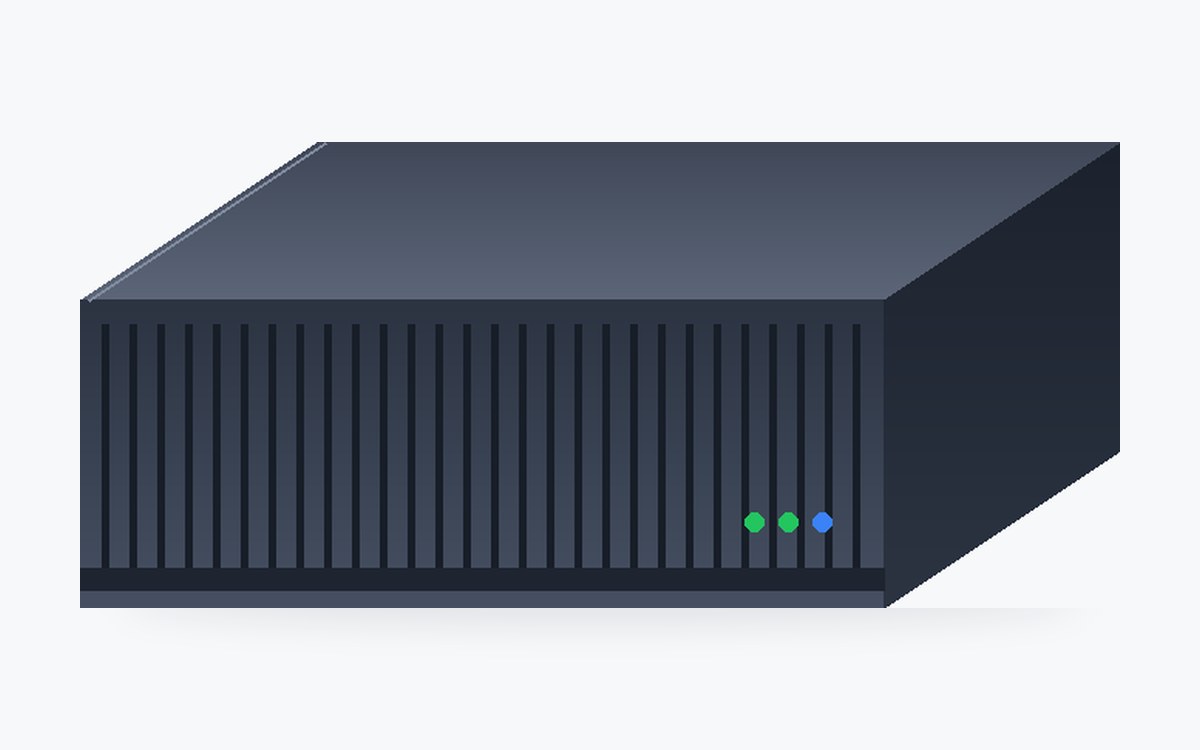
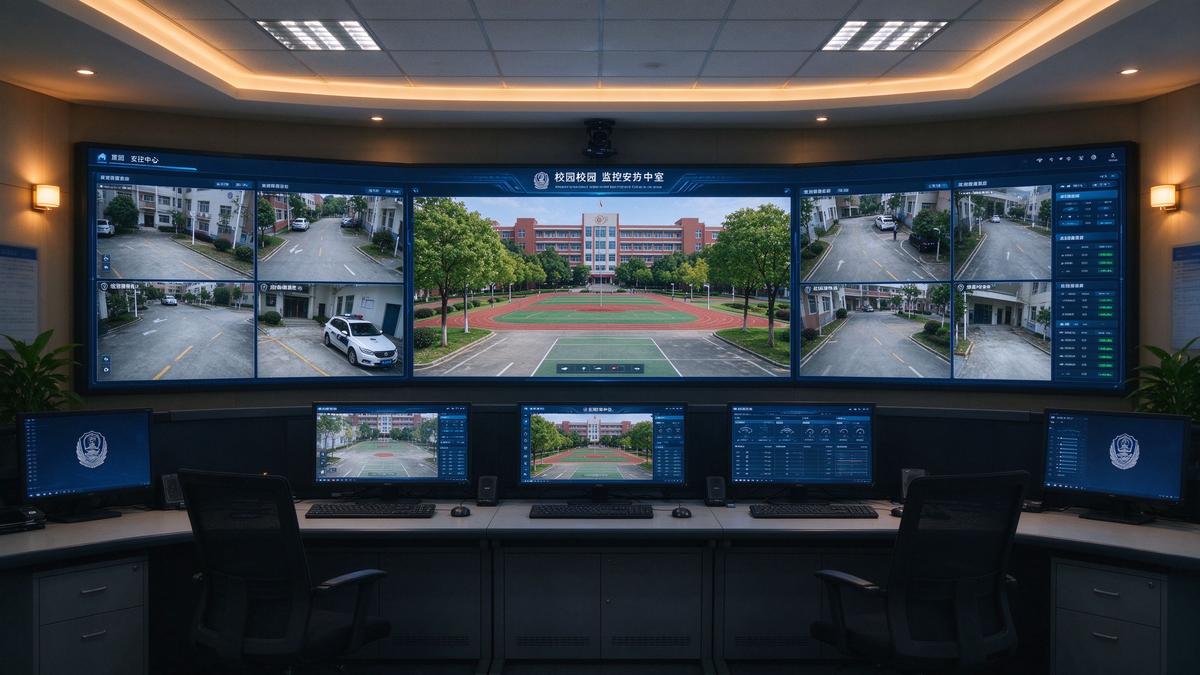
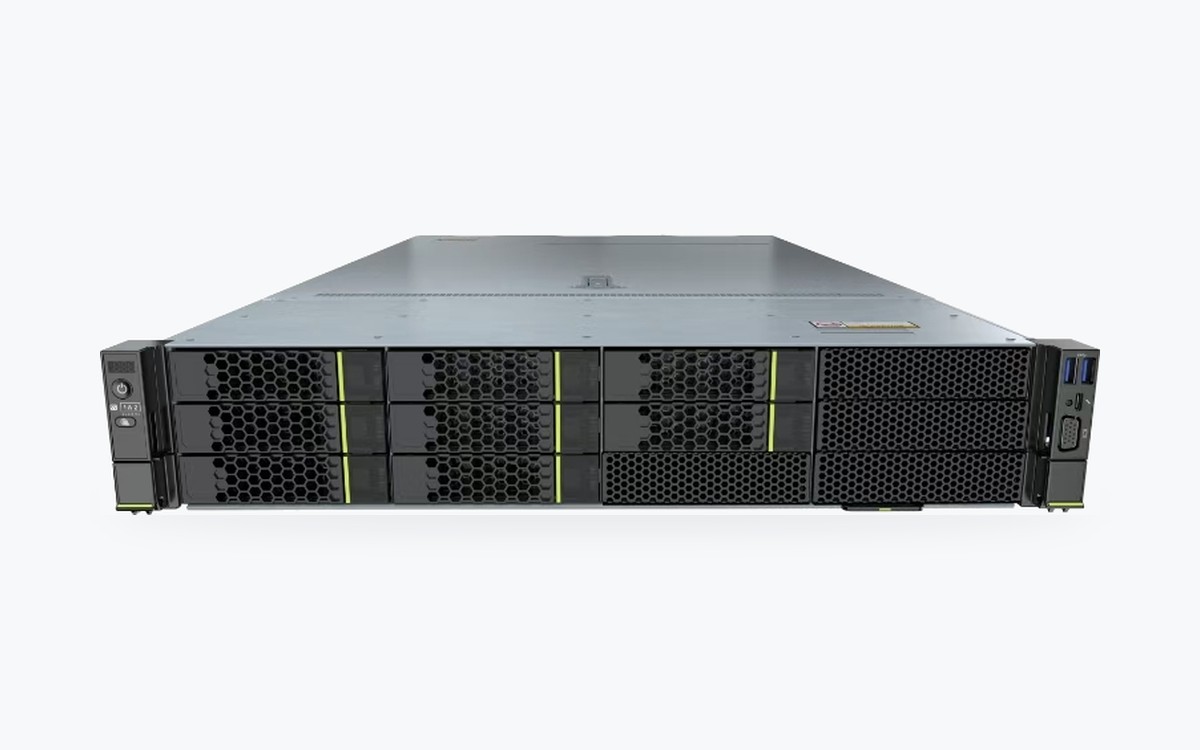
The SXD-NH Series Video Analytics Servers are 2U rack-mount units available in three tiers — 48 / 96 / 192 TOPS — selectable by the number of camera channels to be connected. They are designed for centralized analytics in surveillance control centers.
Computing Power and Channel Capacity
The nominal computing power is the INT8 peak value. The nominal channel count is the baseline figure — the number of real-time video channels supported under 1080P, 25fps, one algorithm per channel, and one frame sampled every 2 seconds. The actual number of supported channels varies with three factors:
| Variable | Change | Impact on Computing Power |
|---|---|---|
| Camera resolution | 2 MP → 4 MP | Decoding and inference load per channel increases by roughly 50%–100%, and the number of supported channels decreases accordingly |
| Frame sampling interval | 2 s → 1 s | Frames processed per second double, and the number of supported channels is roughly halved |
| Algorithms per channel | 1 → 2 | Inference count doubles, and the number of supported channels is roughly halved |
Selection advice: First convert based on "resolution × frame sampling frequency × algorithms per channel," then allow a 30% margin. The specific model and channel count are subject to the delivery list.
Dataflow Architecture and Effective Computing Power
Nominal computing power is only an upper limit. What actually determines channel capacity is chip utilization. This series is built on a reconfigurable dataflow AI chip that compiles models into data pipelines, connecting operators directly into hardware paths so that data is computed as it flows through — with no repeated instruction fetching or movement of intermediate results.
Effective computing power = nominal peak × chip utilization. In publicly available industry comparisons, instruction-set architectures achieve roughly 10%–30% utilization, while reconfigurable dataflow can reach 65%–95% — so with the same nominal computing power, the actual usable computing power differs substantially.
- More economical for retrofits: one device replaces two to three older units, with corresponding reductions in rack space and power consumption
- Reconfigurable algorithms: algorithms can be swapped by compiling and deploying them, with no hardware replacement
- Full utilization: high utilization is maintained even during multi-channel concurrent decoding plus inference
Utilization figures are publicly available industry ranges; measured values for a single model vary with operator structure, resolution, and batching strategy.
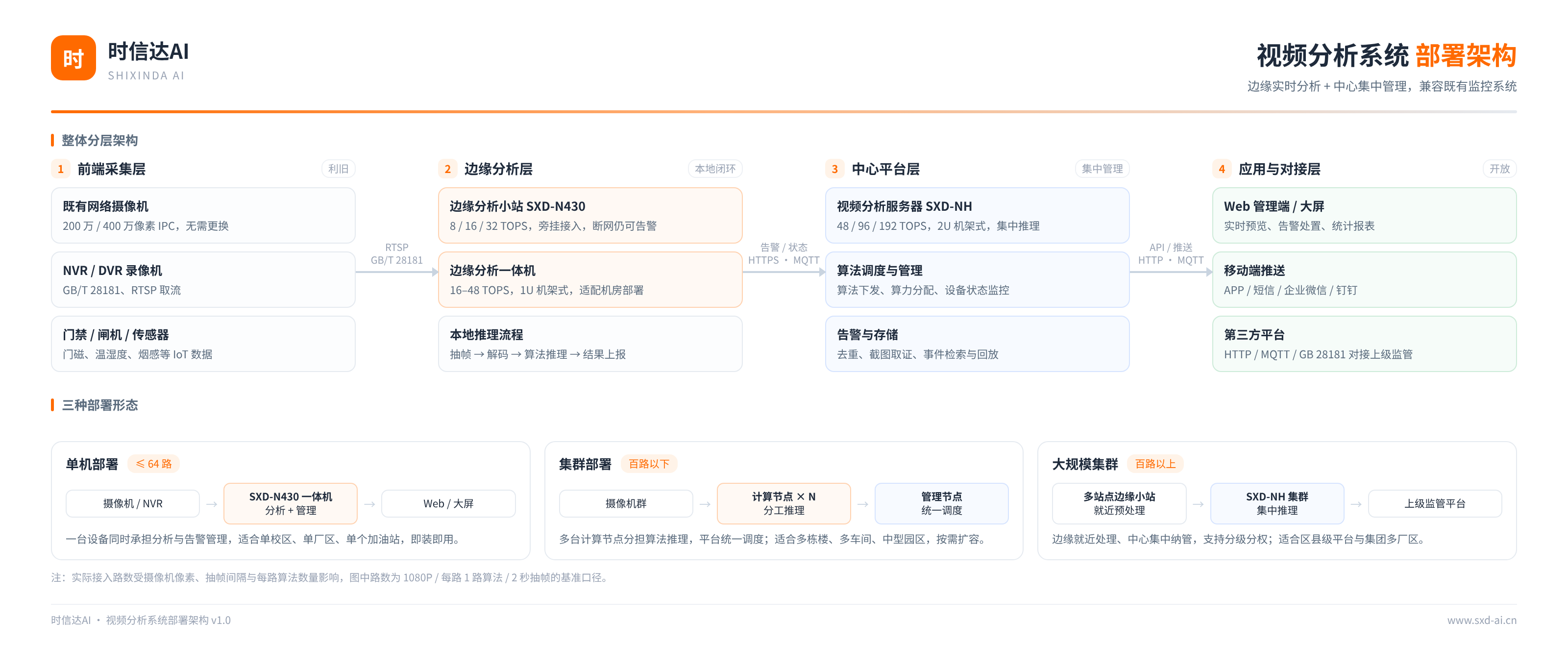
Deployment Architecture
FAQ
Q: Is the nominal channel count the same as the actual number of channels supported? A: No. The nominal channel count is a figure under the baseline conditions; switching to 4 MP or changing to 1-second frame sampling requires recalculation.
Q: Can existing cameras be connected? A: Yes. Existing IPCs and NVRs can be connected via RTSP / GB 28181, with no need to replace front-end equipment.
Q: Can the algorithms be changed? A: Yes. Algorithms can be compiled and deployed without replacing hardware; for on-site customization, the algorithm training platform can be used.
Related Recommendations
- Solution: Smart Campus Security Monitoring Upgrade Solution
- Solution: Smart Classroom Behavior Analytics Solution
References
The following are regulations and standards related to this article, for further verification:
- Technical Requirements for Information Transmission, Exchange and Control of Public Security Video Surveillance Networked Systems (GB/T 28181) — Official source
- Data Security Law of the People's Republic of China — Official source
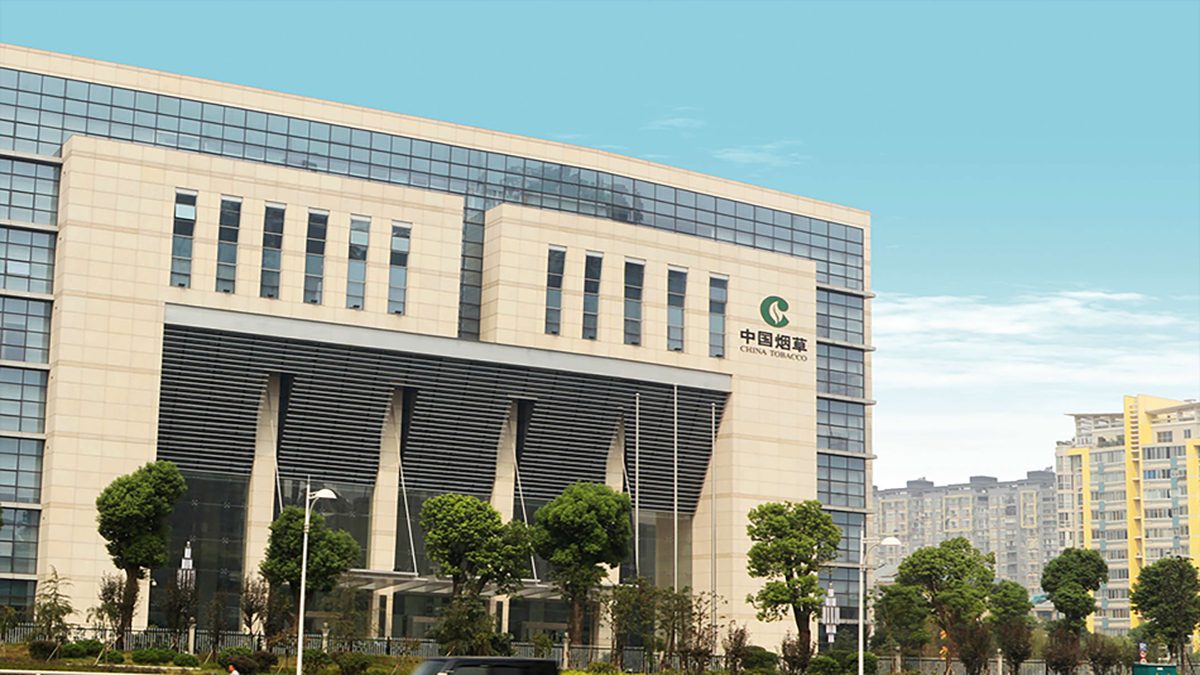
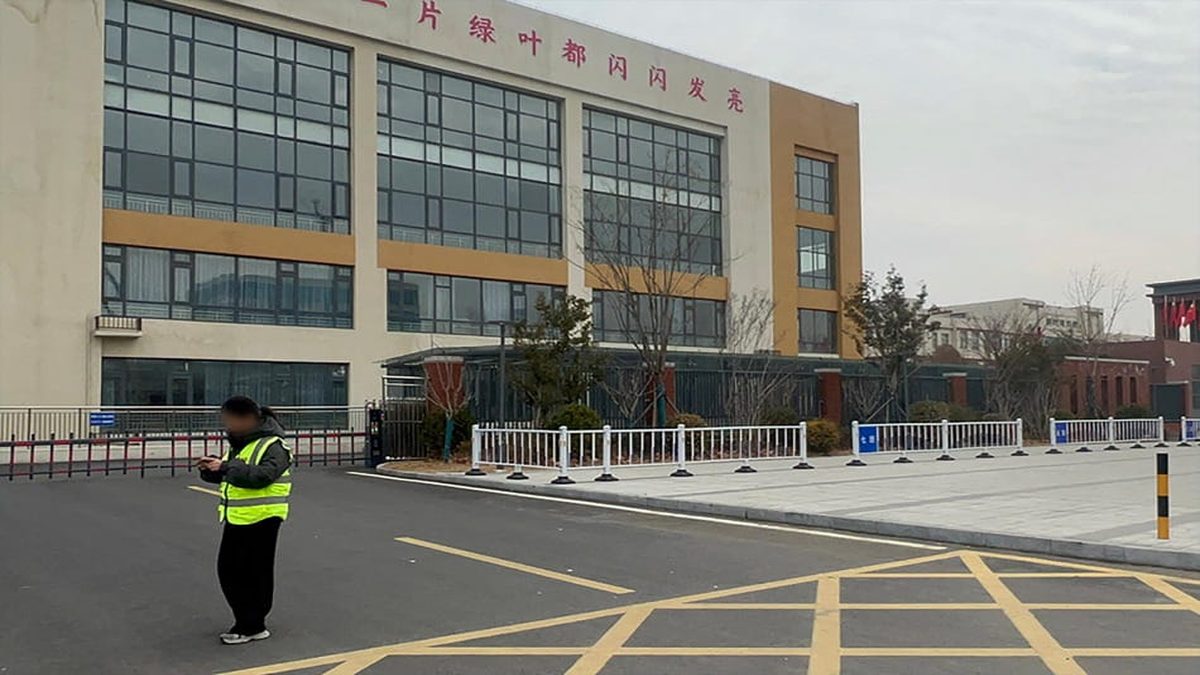
Applications


Core Features
48 TOPS@INT8,64 路
96 TOPS@INT8,128 路
192 TOPS@INT8,256 路以上
JPEG 解码 ≥1080P@1200fps、编码 ≥1080P@900fps
Specifications
| Item | Specification |
|---|---|
| SXD-NH1 | 48 TOPS@INT8, 64 channels |
| SXD-NH2 | 96 TOPS@INT8, 128 channels |
| SXD-NH4 | 192 TOPS@INT8, 256+ channels |
| Image codec | JPEG decoding ≥1080P@1200fps, encoding ≥1080P@900fps |
| Operating system | OpenEuler |
Downloads
FAQ
Do I need to replace the existing cameras?
No. The device is compatible with mainstream network cameras on the market and can be connected via side-attached access, keeping the original wiring and network setup unchanged.
What algorithms are supported?
Common algorithms such as helmet detection, reflective vest detection, area intrusion, smoke and fire detection, absence from post, and crowd gathering are supported, and customization based on the scenario is also available.
What are the delivery lead time and warranty terms?
Regular models are in stock; for bulk projects, please contact sales to confirm the schedule. The warranty period for the complete machine is subject to the contract.
Related Products
View All →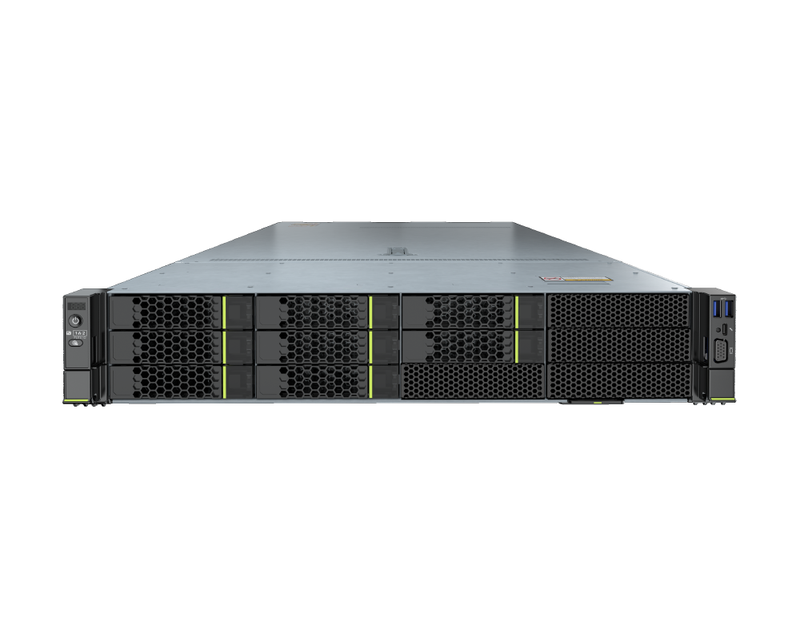
Shixinda AI AI Video Analytics Server
48 TOPSShixinda AI Legacy Cameras + AI Brain: High-performance Video Analysis Server deployed in monitoring centers.
Learn More →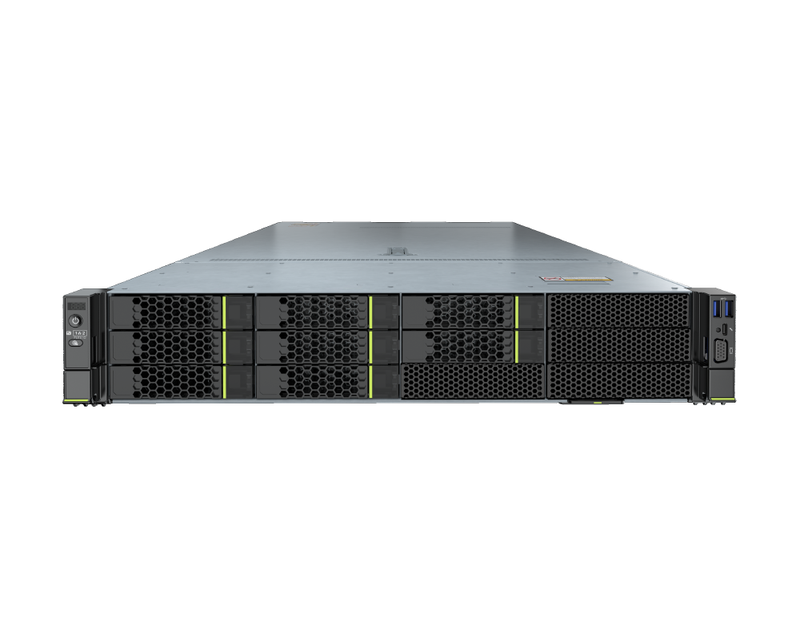
Shixinda AI Video Analytics Server (96-192 TOPS Series)
192 TOPSOld Cameras + AI Brain: Upgrade Solution for Large-Scale Legacy Surveillance Peak computing power up to 192 TOPS, supports intelligent analytics for 64–512 vi…
Learn More →SXD-NH1 Video Analytics Server
48 TOPSShixinda AI Standard Rack-Mount AI Video Analytics Server, delivers 48 TOPS peak computing power, supports real-time analytics for 64 channels of HD video, idea…
Learn More →Shixinda AI SXD-NH2 Video Analytics Server
96 TOPSShixinda AI’s high-performance rack-mounted AI video analytics server delivers 96 TOPS of peak computing power, supports real-time analysis for 128 channels of…
Learn More →
Ready to go smart?
Leave a message or call us for tailored selection advice.